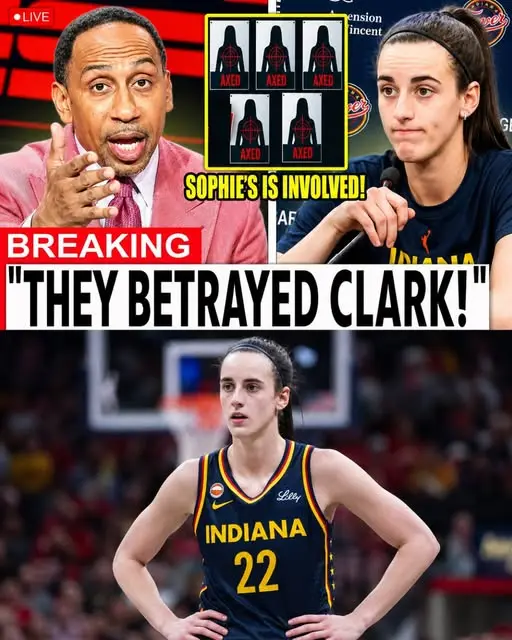
BREAKING: WNBA IN TURMOIL AS EXPLOSIVE CLAIMS ABOUT FIVE INDIANA FEVER PLAYERS AND CAITLIN CLARK SPARK A FIRESTORM — BUT WHAT REALLY HAPPENED BEHIND THE SCENES?
INDIANAPOLIS — A dramatic controversy surrounding Caitlin Clark and the Indiana Fever has ignited intense discussion among WNBA fans, with sensational social media allegations claiming that five players within the organization deliberately undermined the superstar's success.
The accusations have fueled heated arguments about team chemistry, loyalty, leadership, and the growing influence of one of basketball's most recognizable athletes.
But beneath the explosive headlines lies a critical question: Is there credible evidence of sabotage, or are fans witnessing another example of speculation spiraling into a full-scale controversy?
No verified evidence has been established that five Indiana Fever players intentionally sabotaged Clark. Nevertheless, the allegations offer a revealing glimpse into the extraordinary pressure surrounding the franchise and its most famous player.
THE ALLEGATIONS THAT SET SOCIAL MEDIA ABLAZE
The controversy centers on an increasingly provocative narrative: that Clark's biggest obstacles may not have come exclusively from opposing defenses, physical matchups, or the pressure of professional basketball.
Instead, some online commentators have suggested that internal relationships and competing interests could have affected her performance.
The suggestion that five teammates were involved has attracted particular attention.
Yet the circulating allegations do not establish who supposedly participated, what specific actions constituted sabotage, or whether any credible investigation has substantiated the claims.
Those missing details are significant.
Professional basketball involves countless moments that can be misinterpreted when isolated from the broader context of a game. A missed pass, a poorly timed screen, a defensive breakdown, or a disagreement on the sideline can quickly become evidence of an imagined conspiracy when viewed through the lens of online speculation.
For Clark, whose every movement generates enormous interest, those interpretations can spread rapidly.
WHY CAITLIN CLARK REMAINS AT THE CENTER OF THE STORM
Few athletes have transformed the visibility of women's basketball as dramatically as Caitlin Clark.
Her remarkable college career, long-range shooting ability, court vision, and competitive personality helped attract audiences who had never previously followed the WNBA closely.
When she entered the professional league, expectations were extraordinary.
Fans anticipated spectacular performances, immediate victories, and the beginning of a new era for the Indiana Fever.
But professional basketball rarely follows a perfect script.
Even exceptional players must adjust to faster defenses, stronger opponents, complex offensive systems, and the demands of an extended season.
Clark's arrival also placed unprecedented attention on her teammates.
Every offensive possession became a potential talking point. Every decision involving the basketball could be scrutinized by thousands of viewers.
That environment created a difficult challenge for the entire organization: balancing the development of a generational talent with the responsibilities of building a competitive team.
The challenge itself is real. Claims that teammates deliberately worked against her require a much higher standard of evidence.
FIVE PLAYERS, ONE EXPLOSIVE QUESTION
Perhaps the most controversial element of the online narrative is the assertion that five Indiana Fever players were somehow involved.
The number gives the allegation an appearance of specificity, but specificity alone does not establish credibility.
Without verified names, documented incidents, reliable testimony, or official findings, the accusation remains unsubstantiated.
There is also a fundamental difference between basketball disagreements and deliberate misconduct.
Players can disagree about offensive roles. They can become frustrated over playing time. They can struggle to develop chemistry or interpret coaching instructions differently.
None of those circumstances automatically amounts to sabotage.
To establish intentional interference, investigators or credible reporters would need evidence showing both the alleged conduct and the intent behind it.
Until that evidence exists, identifying teammates as perpetrators would be unfair and potentially damaging.
THE OLD GUARD VERSUS THE NEW GENERATION
Beyond the immediate accusations, the controversy reflects a larger debate surrounding Clark's influence on professional women's basketball.
Her popularity has helped bring enormous attention to the league, while established WNBA stars have spent years building its competitive foundation.
That contrast has occasionally produced intense discussions about recognition, respect, media coverage, and the responsibilities of rising stars.
Some fans view Clark as the symbol of a new generation challenging traditional expectations.
Others emphasize that the WNBA's growth depends on recognizing the achievements of the players who came before her.
These perspectives do not have to be mutually exclusive.
Clark's success can elevate the league without diminishing its veterans, just as established players can compete fiercely against her without being portrayed as enemies of her career.
However, sensational narratives often reduce complex professional relationships to simple conflicts between heroes and villains.
That framing may generate attention, but it rarely captures the reality of elite team sports.

THE PRESSURE INSIDE THE INDIANA FEVER ORGANIZATION
The Indiana Fever face a challenge that extends beyond any individual controversy.
Building a successful basketball team requires more than talent.
It demands consistent communication, clear responsibilities, defensive discipline, coaching stability, and trust between players.
For a franchise attracting exceptional media attention, maintaining those foundations becomes even more important.
Clark's strengths as a playmaker create opportunities for teammates, but those opportunities depend on coordinated movement, accurate timing, and collective execution.
When a possession fails, the responsibility is not always obvious.
A turnover attributed to the passer may have resulted from a mistimed cut. A missed scoring opportunity may reflect strong defensive coverage rather than a teammate's reluctance to cooperate.
Such details matter when evaluating claims about chemistry.
Without understanding the team's strategy and communication, viewers cannot reliably determine motivation from isolated clips.
WHEN FAN SPECULATION BECOMES A BIGGER STORY
Social media has changed how professional sports controversies develop.
In the past, a disputed play might have dominated a television discussion for a single evening.
Today, the same moment can circulate through countless accounts, accompanied by dramatic captions, slowed-down footage, and competing interpretations.
The more emotionally charged the allegation, the more likely it is to attract engagement.
For Clark, this dynamic is especially powerful because her audience extends far beyond traditional WNBA followers.
Supporters are deeply invested in her success, and perceived threats to that success can provoke immediate reactions.
But viral popularity does not transform speculation into fact.
A widely shared accusation remains an accusation until supported by reliable evidence.
The danger is that repeated claims can damage reputations even when the original allegations are never substantiated.
WHAT WOULD ACTUALLY PROVE SABOTAGE?
Determining whether deliberate interference occurred would require more than controversial footage or anonymous online commentary.
Credible evidence might include authenticated communications, corroborated firsthand accounts, documented instructions to undermine a teammate, or official findings supported by an investigation.
Ordinary disagreements, disappointing performances, and competitive frustration would not be sufficient on their own.
The distinction matters because accusing professional athletes of deliberately undermining a teammate is a serious allegation.
It questions not merely their basketball ability but their integrity.
For that reason, the burden of proof must remain with those making the accusation.
WHAT HAPPENS NEXT FOR CAITLIN CLARK?
As speculation continues, the most important questions surrounding Clark remain rooted in basketball.
How can the Indiana Fever maximize her extraordinary passing and shooting abilities?
What adjustments will help the team compete against elite opponents?
How can players and coaches develop the consistency required for sustained success?
Those questions have meaningful answers that can be evaluated through performances, strategy, and results.
Clark's influence on the WNBA is already significant, and the intense attention surrounding her is unlikely to disappear.
But the next chapter of her career will ultimately be shaped by what happens on the court rather than by unsupported allegations circulating online.
The Indiana Fever's long-term success will depend on collective effort, not a narrative that assumes every setback must have a hidden explanation.
THE BIGGER QUESTION EVERYONE IS ASKING
The allegations involving five Indiana Fever players have generated an emotionally charged conversation about loyalty, ambition, and the pressures of playing alongside a superstar.
Yet the most consequential fact remains unchanged: there is no verified basis presented for concluding that five teammates deliberately sabotaged Caitlin Clark.
The real story may be less about a secret conspiracy and more about the extraordinary expectations placed on an athlete, a franchise, and an entire league experiencing unprecedented public scrutiny.
For fans, the temptation to search for hidden motives is understandable.
But basketball history is filled with talented teams that struggled before finding the chemistry necessary to win.
Not every disagreement represents betrayal. Not every missed opportunity reveals malicious intent.
And not every viral headline tells the complete story.
The question now is not simply whether Caitlin Clark faced obstacles inside Indiana. It is whether the basketball world can distinguish genuine accountability from accusations that have yet to be proven.